How Westchester Is Helping Schools Get on Board with Electric Buses
Regional leaders are helping local school districts plan for a cleaner, healthier future on the road.
As New York’s 2027 deadline for zero-emission school buses approaches, school districts across the Hudson Valley are beginning to map their road to electrification — and Sustainable Westchester is helping lead the way.
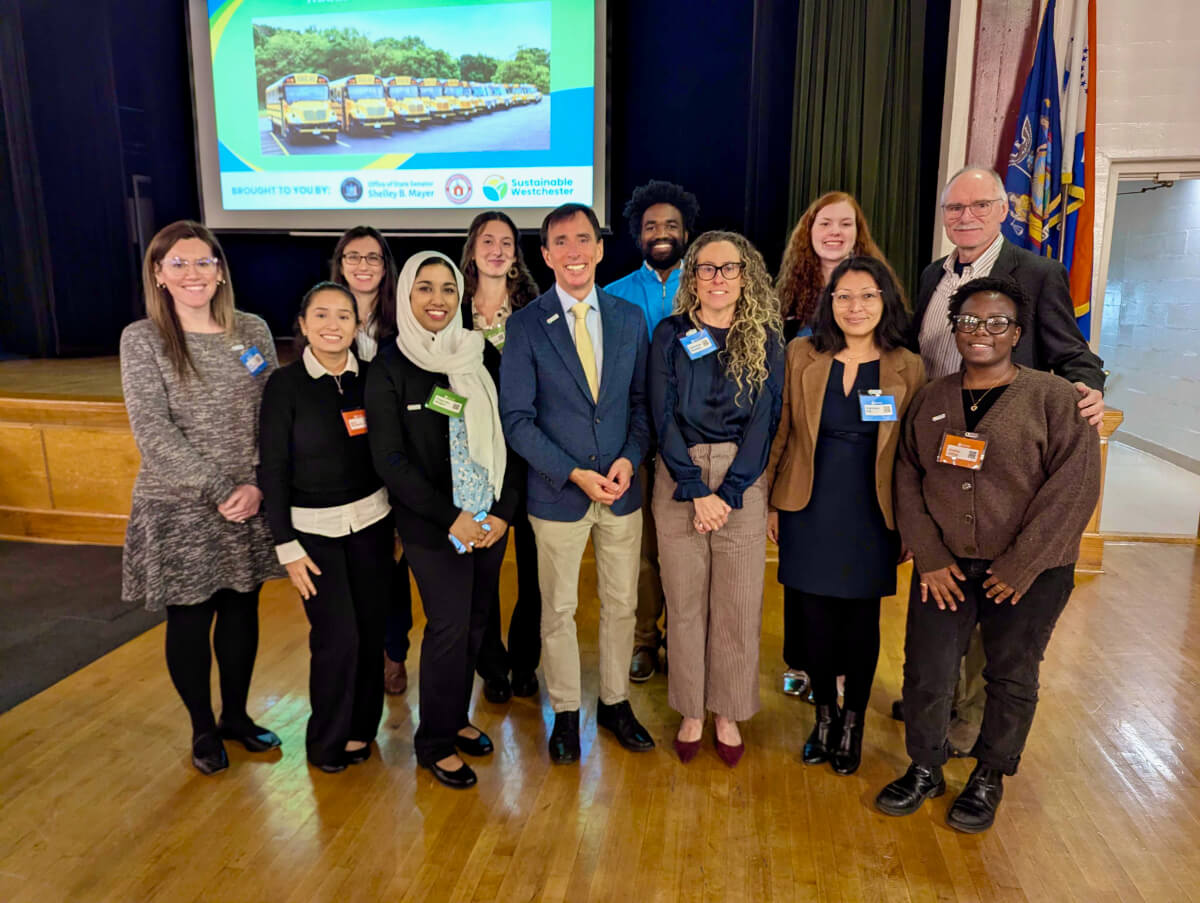
On October 17, Sustainable Westchester, State Senator Shelley B. Mayer, and the Lower Hudson Council of School Superintendents (LHCSS) convened more than 50 education leaders from over 25 school districts, along with state agencies, utilities, and clean energy experts, at the Westchester County Center. The goal: to help schools plan for New York’s ambitious transition to all-electric fleets.
Turning Mandates into Momentum
The state requires all new school bus purchases to be zero-emission by 2027, with full fleet conversion by 2035–2037. That timeline presents both challenges and opportunities for districts as they begin to design, fund, and implement their electrification plans.
The forum brought together superintendents, business officials, and facilities leaders from across the Lower Hudson Valley for a practical, solutions-focused discussion on how to make that shift possible.
Moderated by Sustainable Westchester Executive Director Noam Bramson, the event featured insights from Clarkstown, Scarsdale, Tarrytown, and Katonah-Lewisboro school districts — each at a different stage in the transition — alongside experts from NYSERDA, the World Resources Institute’s Electric School Bus Initiative (WRI), and regional utilities.
Sustainable Westchester also announced the upcoming School Bus Electrification Toolkit, a resource that consolidates funding opportunities, technical guidance, and key contacts to help districts take the next step toward compliance.
“This forum showcased what Sustainable Westchester does best — connecting trusted partners, practical programs, and local leaders to deliver measurable clean energy results,” said Noam Bramson, Executive Director of Sustainable Westchester. “We’re making it easy for school districts, just as we have for homeowners and municipalities, to take action that improves health, saves money, and accelerates the clean energy transition right here in our communities.”
“This important and informative meeting helped all our Hudson Valley school districts as they work to comply with the requirements for electric school buses in the near future,” said State Senator Shelley B. Mayer. “I am pleased to partner with Sustainable Westchester and the Lower Hudson Council of School Superintendents to offer practical and technical assistance to our schools in this complex transition to a cleaner environment for all.”
Real-World Challenges, Local Solutions
The conversation tackled the realities of implementing the state mandate — from building charging infrastructure to managing funding and community expectations.
“It was important to bring people together to discuss the trials and tribulations of the emissions process,” said Dr. Marc Baiocco, Superintendent of Schools, Clarkstown Central School District, and past president of LHCSS. “This forum aimed to help districts develop roadmaps, overcome infrastructure gaps, and address funding and community challenges.”
Clarkstown, for example, owns its bus fleet and must install new charging stations while replacing non-compliant bus lifts — a costly and complex undertaking.
“Funding sources are inconsistent — some are grant-based, and some districts don’t meet the eligibility thresholds,” Baiocco added. “That’s why sharing best practices and learning from one another’s journeys is so valuable. It’s about accelerating our collective progress and ensuring no district navigates this transition alone.”
A Trusted Partner for Local Climate Action
Sustainable Westchester’s role in supporting schools builds on its track record of helping municipalities and institutions across the county reduce emissions and energy costs.
Working with Logical Buildings and the City School District of New Rochelle, for instance, Sustainable Westchester helped the district reduce energy use across ten schools — earning more than $70,000 in demand response incentivesand cutting nearly one megawatt of electricity demand during peak hours.
By turning policy into partnership and data into action, Sustainable Westchester continues to make it easier for public institutions to meet state mandates while achieving tangible savings and community benefits.
What’s Next
Following the forum, Sustainable Westchester will release its School Bus Electrification Toolkit, designed to help districts access funding, technical assistance, and planning templates from NYSERDA, WRI, and utilities.
The organization will continue to work closely with partners and school leaders to support the development of 2027 electrification plans — helping Westchester and the Hudson Valley advance toward a clean, healthy, and equitable transportation future.