By Leo Wiegman and Tom Watson
On June 3 of this year, just before noon, solar panels across New York were supplying roughly 29 percent of the state’s electricity demand, a new record. A month later, Governor Hochul announced that New York had crossed eight gigawatts of distributed solar, putting the state well ahead of schedule on a goal of ten gigawatts by 2030. That is enough to power more than 1.3 million homes and businesses, spread across more than 276,000 individual projects.
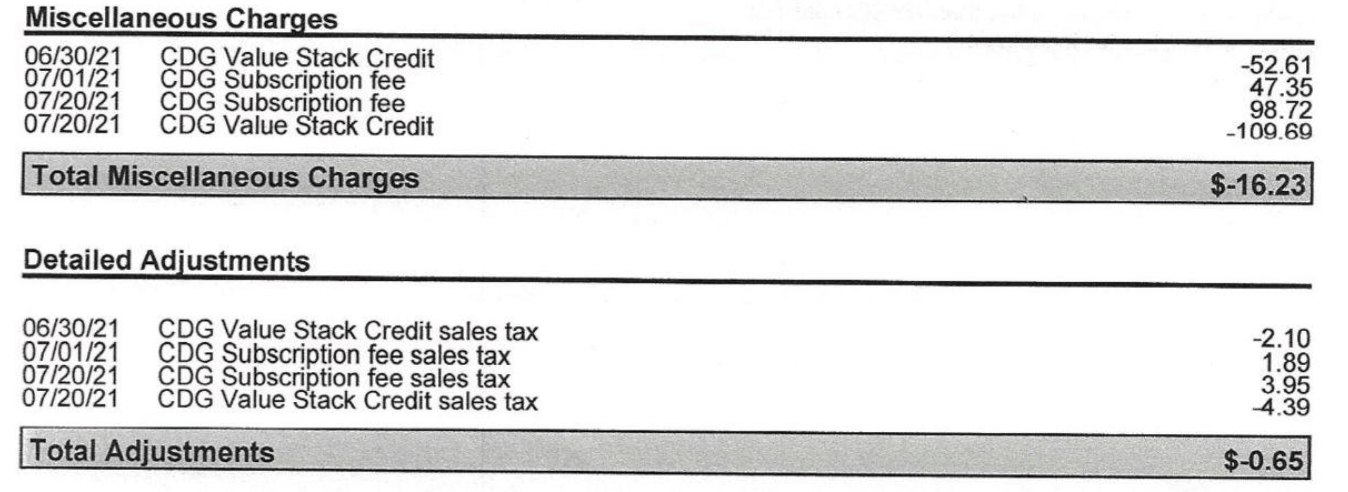
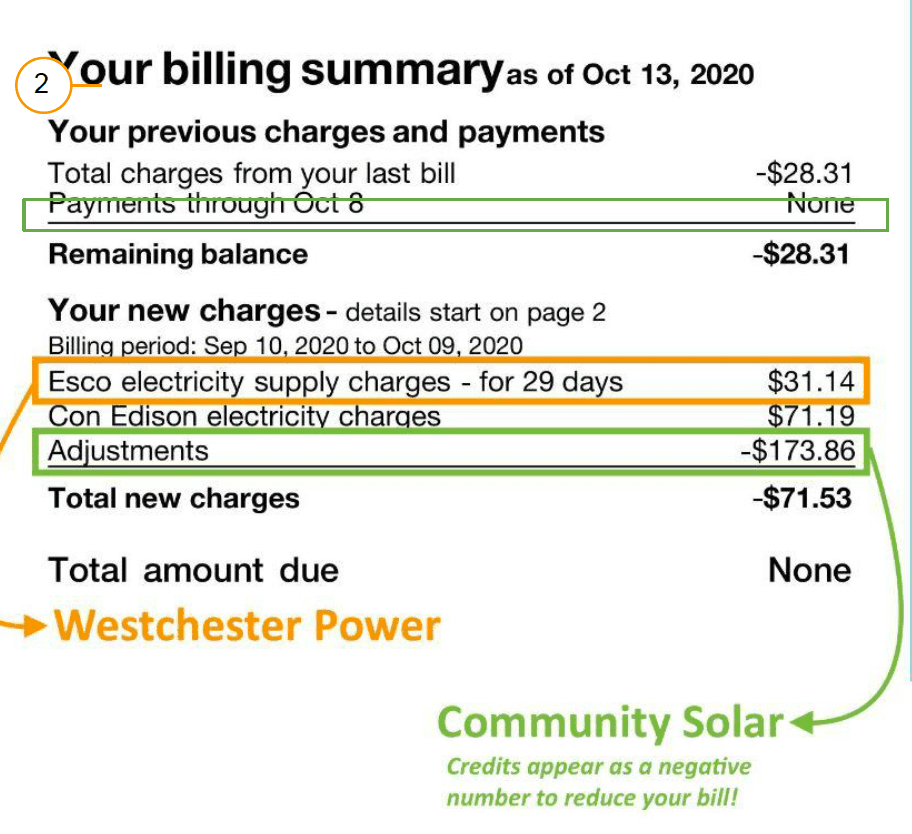
And New York holds 35 percent of the nation’s distributed community solar generation, which means any resident, renter or owner, can subscribe to a local project and lower their bill without installing anything at all. Efforts are underway to encourage New York to double the distributed generation goal to twenty gigawatts by 2035.
Here on Green Street, we believe these are not symbolic numbers. New York’s distributed solar market has attracted roughly $12.2 billion in private investment and supports more than 16,000 good-paying jobs. Last summer, solar generation saved New Yorkers an estimated $90 million simply by easing demand during peak hours, a benefit that flows to every ratepayer, whether or not they have a panel to their name.
Zoom out and the picture gets more striking. The world installed a record 664 gigawatts of solar in 2025, and the global solar fleet passed three terawatts in early 2026 after tripling in just four years. Solar now supplies about 9 percent of global electricity and accounted for 77 percent of all new renewable capacity added last year. Nothing in the history of the power sector has scaled like this.
The American story is easy to misread. The United States installed 43 gigawatts of solar in 2025, making it the leading source of new grid capacity for the fifth consecutive year, with solar and storage together accounting for 79 percent of everything added. This is not a red state vs. blue state issue. More than two-thirds of that solar capacity was built in states carried by President Trump, such as Texas, Florida, and Arizona. In the first quarter of 2026, the country passed six million cumulative solar installations.
Solar is not a coastal enthusiasm. Solar is what gets built when a utility needs power quickly and affordably. The massive grid outages Texans suffered in the Big Freeze in 2021 have been avoided with a massive deployment of clean energy there. Texas’ grid now produces 35% of energy from solar, wind, and battery storage, nearly matching natural gas. It can power all of New York on a hot day.
The federal and state policies for solar, wind and energy storage deployment have become a mixed picture. The federal policies adopted in 2025 have eliminated direct residential tax credits for solar and have terminated large offshore wind contracts in favor of expanding natural gas investments. In the transportation sector, federal about-faces have eliminated electric vehicle tax credits and weakened fuel efficiency standards even fuel prices at the pump soar.
At the state level, New York has maintained a statewide standardized interconnection review process for clean energy projects, which helps remove risk for developers. In addition, the state’s effective incentive programs for solar added $200 million for 2027 on top of a robust energy storage incentive program. Commercial projects and third-party-owned residential systems can still use the federal 48E tax credit.
In short, despite some national head winds, New York State remains a great place to develop clean energy projects. The economics are particularly compelling as retail electricity rates climb sharply for homeowners and businesses alike.
So the case for acting now is a practical one.
- Parking lots: Westchester County has hundreds of paved parking lots large enough to host a solar canopy to power the on-site stores or a community solar project.
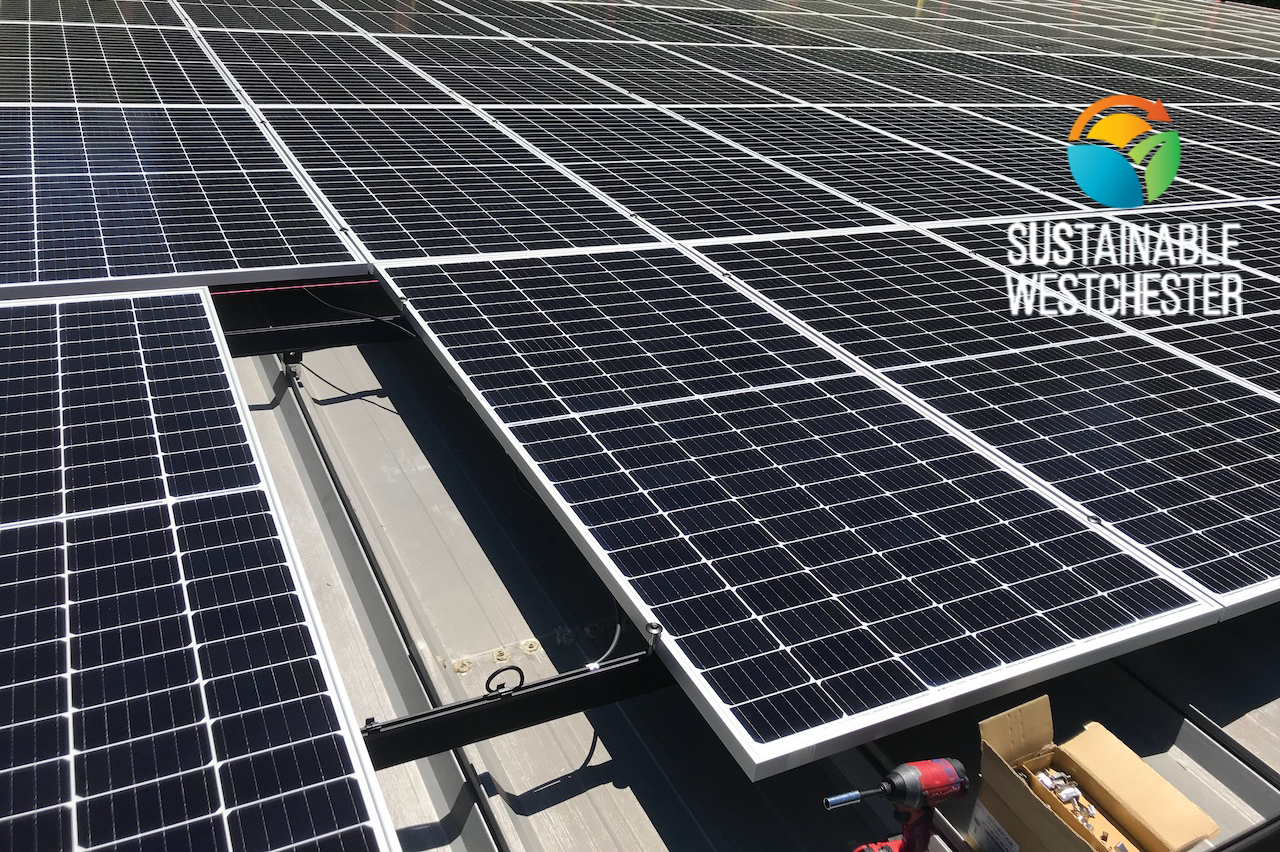
- Rooftops: Westchester County has hundreds of large non-residential rooftops that could benefit from on-site generation or a community solar project.
- Energy storage microgrid systems: Westchester County has hundreds of locations where the local utility has adequate hosting capacity for grid-stabilizing energy storage microgrid projects where a small footprint can bring a large economic return.
- Why community collaboration matters: None of this work on solutions happens in isolation. Soaring energy costs, heat waves, poor air quality, and brown outs are just part of our daily lives now. Unless we act together within communities and across communities, learning from each other. That’s how models like community solar and demand response programs allow any residence to support clean energy.
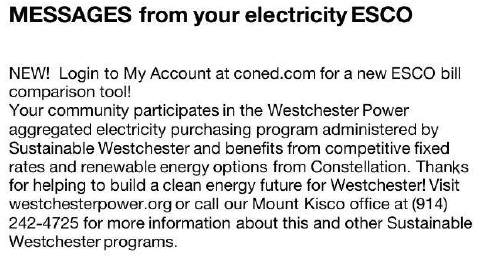
Sustainable Westchester has a unique model that brings together all of our towns, villages and cities in a collaborative effort to make our region healthier and more affordable. As we’re fond of saying, not every county has a Sustainable Westchester. We’re here because our residents and our governments support our mission. And that’s because this county is a model for positive change.
Westchester County has been out front of the clean energy transition for a decade. At Sustainable Westchester we intend to help our county stay the course and continue to innovate. Administrations change, incentives come and go, and the arguments recycle every few years. The sun will be there regardless. The only question is how much of it we are prepared to catch.
Leo Wiegman (leo@sustainablewestchester.org) is Director of Energy Systems.
Tom Watson (tom@sustainablewestchester.org) is Executive Director.
Note: the essay posted here is from Memo From Green Street, a new monthly briefing from Sustainable Westchester on the clean energy transition and environmental action — what’s happening, what it means, and what’s worth your attention. Send a note to tom@sustainablewestchester.org if you’d like to be added to the email list.